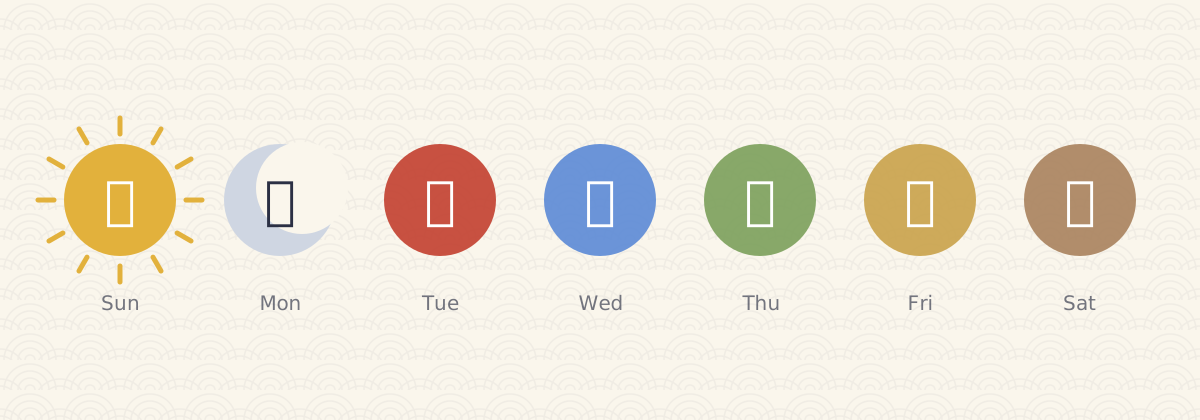
Sun, Moon and Five Elements — The Japanese Days of the Week
Monday is the moon, Tuesday is fire, Wednesday is water: the days of the week are a pocket lesson in kanji and ancient cosmology.
The Japanese week is a tiny astronomy lesson. Each day pairs 曜日 (yōbi, day of the week) with a celestial body from ancient Chinese cosmology: the sun, the moon, and the five visible planets — which are themselves named after the five elements: fire, water, wood, metal and earth. Learn seven kanji, get the solar system for free.
The seven days
| Word | Reading | Meaning |
|---|---|---|
| 日曜日 | にちようび nichiyoubi | Sunday — 日 sun |
| 月曜日 | げつようび getsuyoubi | Monday — 月 moon |
| 火曜日 | かようび kayoubi | Tuesday — 火 fire (Mars) |
| 水曜日 | すいようび suiyoubi | Wednesday — 水 water (Mercury) |
| 木曜日 | もくようび mokuyoubi | Thursday — 木 wood (Jupiter) |
| 金曜日 | きんようび kinyoubi | Friday — 金 metal/gold (Venus) |
| 土曜日 | どようび doyoubi | Saturday — 土 earth (Saturn) |
Same kanji, double meanings
These seven kanji are absurdly productive. 日 is also “day” and “Japan” (日本 = origin of the sun). 月 is also “month” — the moon literally marks months. 金 means gold and money, which is why payday feels right on 金曜日. All seven are JLPT N5 and among the first kanji anyone learns: start with 日, 月 and 水.
Weekend words
| Word | Reading | Meaning |
|---|---|---|
| 週末 | しゅうまつ shuumatsu | weekend |
| 平日 | へいじつ heijitsu | weekday |
| 祝日 | しゅくじつ shukujitsu | national holiday (red on the calendar) |
| 花金 | はなきん hanakin | “flower Friday” — retro slang for Friday-night freedom |
Japan packs public holidays generously — Golden Week strings several together in early May. When a holiday lands on Sunday, Monday becomes 振替休日, a make-up holiday. The calendar kanji you just learned decode all of it.
🔊 Tap any word in the vocabulary tables to hear it spoken.
More in History & Tradition
- Reiwa, Shōwa, Meiji — How Japanese Era Names Work
- The Twelve Zodiac Animals (Eto) — Why Everyone Knows Your Birth Year
- Matsuri — Japanese Festivals, from Mikoshi to Fireworks
- Oshōgatsu — How Japan Celebrates New Year
- Sumo — Rituals, Ranks and the Words of the Dohyō
- Japanese Castles — Reading Himeji, Osaka and the Words on the Walls
- Japanese History in Ten Periods — From Jōmon Pottery to Reiwa
- Shrines and Temples — How to Visit Respectfully
- Seijin Shiki — Japan's Coming-of-Age Ceremony
- Origami — The Art of Folding Paper
- Obon — Japan's Summer Festival for Ancestors
- Shodo — The Art of Japanese Calligraphy