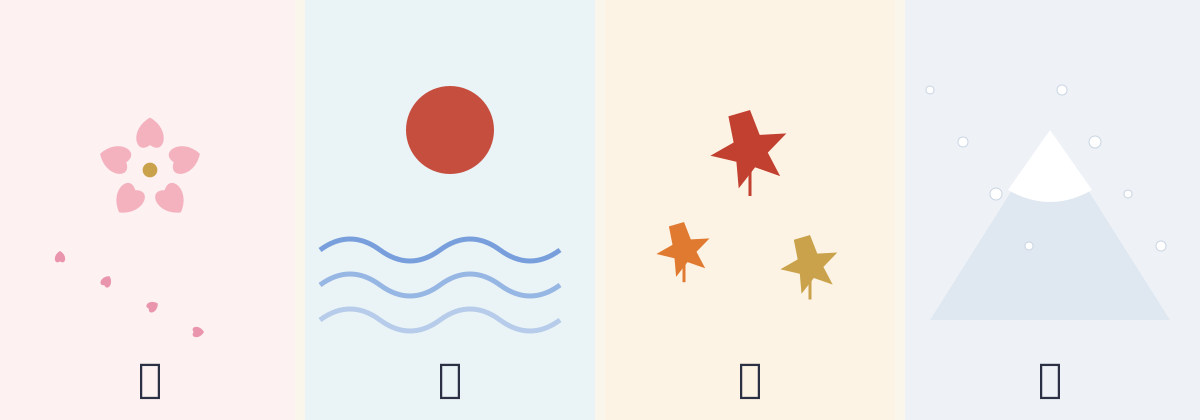
The Four Seasons in Japanese — shiki (四季)
Japan's calendar, conversation and food all revolve around the four seasons. Learn the words for spring, summer, autumn and winter — and why 四季 matters so much.
Ask Japanese people what makes Japan special and many will answer 四季 (shiki) — the four seasons. It's not that other countries lack seasons; it's that Japanese culture is built around noticing them. Seasonal greetings open letters, menus change with the months, train stations hang plastic momiji leaves in November. Learning the season words unlocks a huge amount of everyday conversation.
The four seasons
| Word | Reading | Meaning |
|---|---|---|
| 春 | はる haru | spring — the season of new starts (school and work years begin in April) |
| 夏 | なつ natsu | summer — festivals, fireworks and cicadas |
| 秋 | あき aki | autumn — harvest, appetite and red leaves |
| 冬 | ふゆ fuyu | winter — hot springs, mandarin oranges under the kotatsu |
| 四季 | しき shiki | the four seasons |
| 季節 | きせつ kisetsu | season (the everyday word) |
How seasons shape the language
Japanese has an entire vocabulary genre — 季語 (kigo, season words) — used in haiku to anchor a poem to a time of year. A frog means spring; a cicada means summer. Even business emails open with seasonal set phrases like 「暑い日が続きますが…」 (“the hot days continue, but…”). You don't need to master these early, but recognizing the four season kanji pays off immediately: they appear in weather forecasts, menus, song titles and names.
Season-flavored words you'll actually meet
| Word | Reading | Meaning |
|---|---|---|
| 春休み | はるやすみ haruyasumi | spring vacation |
| 夏祭り | なつまつり natsumatsuri | summer festival |
| 花火 | はなび hanabi | fireworks — literally “flower fire” |
| 秋晴れ | あきばれ akibare | clear autumn sky |
| 冬眠 | とうみん toumin | hibernation |
| 新学期 | しんがっき shingakki | new school term |
Which season is “best”?
A safe and beloved small-talk topic. Spring wins on 桜 (cherry blossoms), autumn on food and foliage — ask anyone 「どの季節が好きですか?」 (Which season do you like?) and you'll get an opinionated, friendly answer. Deep-dive the two star seasons next: sakura & hanami and kōyō, the autumn leaves.
🔊 Tap any word in the vocabulary tables to hear it spoken.
More in Seasons & Nature
- Sakura and Hanami — Japan's Cherry Blossom Culture
- Tsuyu — Japan's Rainy Season (梅雨)
- Kōyō and Momijigari — Autumn Leaves in Japan
- The 72 Microseasons of the Old Japanese Calendar
- Onsen — Japan's Hot Spring Culture, Explained
- Tanabata — the Star Festival of Wishes (七夕)
- Kotatsu, Mikan and the Japanese Winter at Home
- Hanabi — Japan's Summer Fireworks Culture